There are lots of neat slow-motion videos of dogs shaking. But this one is probably the best. Why? Because it features David Hu, a mechanical engineer from Georgia Tech, who explains his research on shaking dogs AND how that research can be applied to all sorts of things ranging from solar panels, to cameras, to planetary rovers (OMG, this pun just made itself 😀 ).
The video is 2 minutes long. Don’t let the mouse in the first frame deceive you, it’s about dogs. It really is full of adorable shaking dogs.
This is a great example of scientific research with applications that wouldn’t, at least immediately, come to mind for most of us.
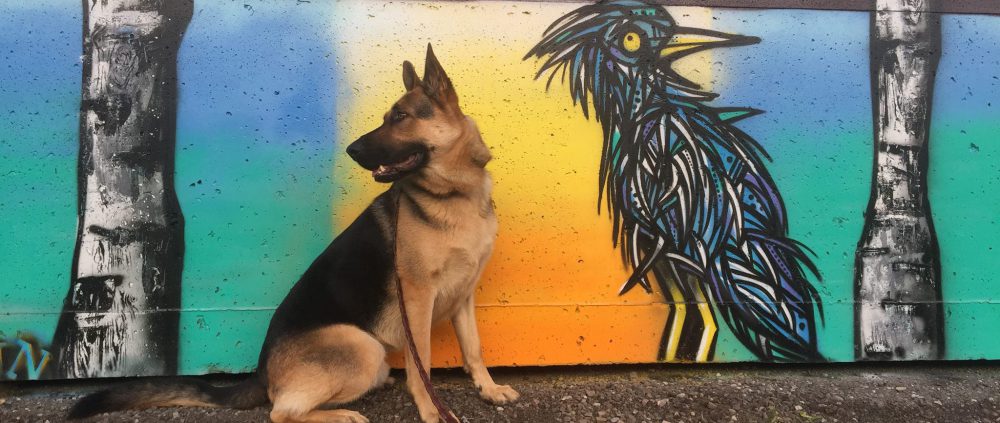
At 22 I was finishing up my undergraduate degree and itching to see the world. I needed to get off the Canadian Prairies, away from Saskatoon where I was going to school, and escape any and all things related to farming. So, I bought a good pair of shoes, a backpack, and a plane ticket and was off to eat my way across Europe.
I devoured curry and toured the Tower of London, nibbled Pain au Chocolat after climbing the Eiffel Tower, picnicked with a grey-eyed man on the Piazza San Marco and then we strolled arm in arm along Venice’s canals. I gorged on goulash and spaetzle before retiring to Budapest’s Roman Baths, snacked on Sachertorte after seeing The Magic Flute at the Vienna Volksoper, and drank beer under Munich’s Glockenspiel. And, I wallowed in homesickness as powerful as it was unexpected. I would never have predicted that the best part of that trip would be returning home.
Johannes Hofer combined the Greek words for homeward journey, ‘nostos,’ and ache, ‘algos,’ to give us ‘nostalgia,’ which originally meant, quite literally, ‘homesickness.’ He coined the term to describe an illness rampant among Swiss mercenary soldiers in France who were incapacitated by a melancholic yearning for their mountain homes.
My travels always ended with nostalgia, until now.
If it weren’t for the brutal facts that winter is coming, and that I need to, eventually, show up at work to get money for gas, beer, groceries, and campground fees, I would have happily kept on trucking. Not for a single second did I ache for home.
Milo and I in our travel trailer—like turtles, our home was always with us. And I realized that, for me, home is where the puppy is.
An audience can make anyone nervous. When I was in school, I had no trouble solving math problems with a pencil and paper, but when the teacher asked me to work one on the blackboard, my brain turned into pudding. I suffered from stage fright, and the fear of looking stupid in front of other people made it nearly impossible to think.
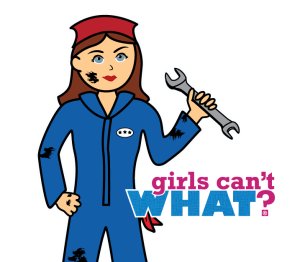
But, in addition to this everyday kind of stage fright, people can face extra challenges doing their best work. Psychologists have identified Stereotype Threat as one of those challenges. Stereotype Threat can occur when a person is performing a task that has the potential to reinforce negative stereotypes about their group.
When triggered, Stereotype Threat makes people perform less well than they would have otherwise. And sadly, it is very easy to trigger. Being the only member of your group in a room or filling out a survey that asks about your gender before taking a test can do it.
I hypothesize that when people watch me hitch up my trailer, I screw up more than usual because, in addition to stage fright, I experience stereotype threat.
Hooking up a trailer is a gendered activity (it is associated with men), and people seem to expect women to be bad at it.
In my three months of camping
I never saw another woman do this task.
Women and men often expressed surprise when they saw me doing this task. I got questions like “Did you level it yourself?”
Men walking by regularly offered to help me.
Women walking by never offered to help me.
Some women walking by offered to go get their husbands so their husbands could help me.
Sometimes people just stared at me while I hitched my trailer up.
Granted, some of them could have been wondering about a person doing this on their own; another set of eyes would have made it easier. But, I strongly suspect that people would have been less fascinated by a guy doing this on his own than by a woman doing it on her own.
When people watched me hitch up my trailer I felt very aware of being a woman. In fact, the only time on this trip when I felt so conscious of identifying as a woman was when an obnoxious drunk guy stumbled onto my campsite and started giving me grief. I need to thank my German Shepherd, Milo, for his support in that situation.
Hitching up my trailer in front of an audience seems like a ‘perfect’ situation for stereotype threat to do its thing.
It’s weird that it took me months to figure this out because I study women and minorities in science and engineering, and in that context stereotype threat is A. Big. Deal.
And I wish I’d noticed this sooner because there are things a person can do to protect themselves (and the people around them) from experiencing stereotype threat.
I could have:
spent some time on a women RVers facebook group to remind myself that even though I didn’t see them, there are lots of women who can do this chore
reminded myself of women who had exemplary mechanical abilities
reminded myself that I was actually really good at this task
reminded myself that everyone has trouble attaching the weight distribution bars sometimes.
Research shows that all of these things could have helped me reduce my experience of Stereotype Threat, and that would have made being a solo woman RVer more fun!
What would champion French Rally Driver Michele Mouton do?
Here’s a link explaining how you can reduce the effects Stereotype Threat. Some of the advice is about how to help ourselves, and some of it is about how to protect the people around us–great information for parents, teachers, managers, and anyone who loves someone who might be hurt by Stereotype Threat.
One of the neatest thing about being human is that I get to know what it is like to be me. I’m not saying I’m all that, I’m saying that I have consciousness, self-awareness, and that it’s great. For example, I love chocolate cake. Not only am I happy when I eat it, I know that I’m happy when I eat it, and moreover, I know that there’s a me that is happy. There is something that it is like to be me. I can stop, introspect, and think about what I’m thinking right now—which, thanks to that last example, is chocolate cake.
Amoebas don’t get to do this. I doubt an amoeba says to itself, “Damn I’m hungry. I’m going to tuck into the next paramecium I see.” That amoeba exists and eats, but it doesn’t know what it is like to exist or to eat, it doesn’t know that IT is doing the eating and I am pretty sure that it didn’t enjoy doing the eating.
Consciousness, humans have it, and amoebas don’t. But what about other creatures? One way scientists have tried to test whether a creature has consciousness is to see if it recognizes itself in a mirror. Most creatures, including humans less than 18 months old, don’t.
When my cat Hoss jumps up on my bathroom counter while I’m getting ready in the morning, he puffs up, hisses, and arches his back at the sight of his reflection, just like he does when he sees the neighbor’s cat walk by the living room window. While he might have some kind of consciousness, he doesn’t provide evidence of it when he treats his reflection like it’s another cat.
When a chimp sees its reflection, it might initially ask its mirror image to play, but before long you can see a lightbulb go off in that chimp’s eyes as it realizes it’s looking at itself. At this point, chimps start doing things like opening their mouths to check out their molars and pulling their eyelids down to look at the whites of their eyes. My personal favorite is when they turn around to look over their shoulders at their rear ends like they’re trying on jeans in a department store. It seems like these chimps know they’re seeing themselves, and this means they have some idea that they are a self, that they have some sense of being a “me.”
Scientists also perform an experiment called the Mark Test, in which they put dye on a chimp’s forehead and then plunk her back in front of a mirror. When a chimp passes this test she will touch her forehead as if to say, “What the heck is this stuff on me?” Again, there is that word, “me.”
Adult humans, chimps, elephants, magpies, and dolphins have all ‘passed’ the mark test. But not dogs.
Psychologist Andrea Horowitz realized that the mirror and mark tests might not tell us much about dog consciousness because these tests are primarily visual and dogs rely heavily on their sense of smell. So, instead of marking a dog’s head with dye, she had the cool idea of marking a dog’s scent with another scent. In other words, she performed a sort of olfactory mark test.
She exposed a bunch of dogs to four kinds of smells: their urine, an unfamiliar dog’s urine, their urine with another scent added, and that other scent on its own.
She found that of all these scents, dogs were most interested in the smell of their urine with another scent added to it. These dogs paid a lot of attention to the smell of their own “marked” urine.
So, does a dog paying attention to the smell of its ‘marked’ urine, mean the same thing as a chimp paying attention to its marked reflection in a mirror?
The comparison is complicated because while we can observe a chimp try to remove the dye from its face, we can’t observe a dog try to remove the funny smell from its pee.
consistent with a thesis that dogs notice their odour when it is changed, and move to more fully examine it. Such behaviour implies a recognition of the odour as being or from themselves.
The neat word in this quote is ‘themselves.” If the dog could talk, it might say, “Hey, this smells like me, but with something different added in.”
We need to be careful not to make too much of a single study. There is still a lot of research that needs to be done on canine consciousness and canine minds.
But I have to admit that I am enthralled by Horowitz’s idea of an olfactory mirror for dogs.
Milo the AwesomeDog loves to sniff. He regularly sniffs so vigorously that he has to sneeze out the debris he’s sucked into his nose. I am almost overcome with curiosity about what the movie in his mind must “look like” when instead of being based on sight, it’s based on smell-o-vision. And then Horowitz comes along and uses this smell-o-vision as way to look into what it is like to be him. Milo knows he smells, therefore he is?
A couple of months ago I signed Milo and me up for a research project investigating canine fear and aggression in veterinary settings. I jumped into this survey eagerly, sure that Milo’s jackassery would provide them with some interesting data. They wanted to know about dogs acting out, and boy could tell them about a dog acting out.
I don’t think I was ever so pleased to be so disappointed about an experiment. You see, the survey questions all had a time index.
What sorts of fear behaviour did Milo exhibit at his last vet visit? None.
During that visit did he show any aggressive behaviours when:
Getting weighed? No.
Touched? No.
Vaccinated? No.
Having his ears examined? No.
Having blood drawn? No.
Having his temperature taken? OK, Yes. He growled at the vet tech when she tried to stick a thermometer up his bum. Fair enough. We didn’t get a temperature that day.
If those questions were about my worst vet visit or any vet visit three years ago, the answers would have been different. When I sat down to take this survey, I was ready to give those three-year-old answers. But, in the last three years Milo, and I, have changed. He’s a more confident dog. I’m a calmer person. And we’re a stronger team.
I caught myself living in the past again when Milo and I were camping at Killbear Provincial Park. Our campsite was beside what must have been an intergenerational, extended family camping trip. There were at least seven children under the age of five, they yelled a lot, and all of them, except the newborn, seemed to think that running while yelling was the thing to do.
Screaming creatures darting around—the kind of game that Milo was always keen to join, except that he weighed more than any three of those kids combined. I steeled myself for a couple of days of barking and a complaint from the Park Office.
Would you like to know what happened?
Nothing.
Milo started staring at one of the kids, and I told him to knock it off and that we don’t bark at silly things. He knocked it off and did not bark at the silly things. There were a bunch of people with dogs at that campground. And every single dog that walked by reacted to those children more than Milo did, every single one.
People came by my site and complimented Milo on being such a good boy.
One person even told me that I was “lucky” to have such a good dog. I let that one slide on by.
I will always be careful and respect the fact that Milo is a formidable animal. We’ve done a tremendous amount of work together over the years, developed a fantastic relationship, and things got better.
I love him to distraction. I just have to remember to love the dog he is right now.
The damn snow was dragging at my feet, and I knew I wasn’t going to make it to my car before I started to cry. Milo and I were not at our finest on that winter day more than three years ago. Fifteen dog-handler teams had arranged themselves in a big circle on a snowy country field, and we were taking turns walking our dogs around the group. The idea was to keep your dog paying attention to you, and not to the other dogs or people or bunnies in attendance. The accomplished teams heeled with quiet precision around the field. But most of us newbies kept our dog’s focus with a steady stream of happy chatter. We could have used food treats for this, but it is hard to hand out treats when wearing mittens and it was cold enough that mittens were mandatory.
Milo and I were doing fine until another male gave him a glance that asked: “Wanna dance?” Milo looked back: “Sure, let’s go.” And off came the gloves. The other dog snarled. Milo lunged. My feet broke through the crust on the snow, and I was stuck.
It all took a very long heartbeat. Friends swooped in to take care of Milo, and I clambered out of my hole. Everything was OK, except for my blood pressure and my pride. This was life with a reactive dog. It just took a wrong look. He didn’t fight. I saw to it that Milo never got into a fight. But both of us were bundles of stress.
Milo and I retreated to an adjacent field where we could cool down. We played a bit, did some obedience, and practised calmly watching those other dogs from a distance. I’d been working on Milo’s reactivity for a while already, but this exercise was a bit too much and a bit too soon.
What put me in tears that afternoon wasn’t just Milo’s reaction, it was the supportive kindness of the people around us. We were training with the Kitchener-Waterloo German Shepherd Club. These people know GSDs, and many of them went through similar challenges with their pups.
After a few minutes on our own, the club president came over to check on Milo and me.
“We’re going to work on recalls now, do you and Milo want to join us?”
“Really? Seriously?”
“Sure, we’re all paying attention. It will be fine.”
It was more than fine. Milo was perfect. I left him with another handler at one end of the field, ran about 30 metres away, and called him. They released him, and he was in flight, skidding into a beautiful sit in front of me. Folks cheered.
As we were packing up for the afternoon, one by one, people came up to me. They said things like:
“It gets better.”
“He’s a beautiful dog.”
“I’ve been there, and I know it’s hard.”
“Good for you for working so hard with him.”
“Half a dozen dogs here used to react like that, and look at them now.”
I needed this support and encouragement, but darn it, I was at the end of my rope, and I knew this kindness was going to make me cry. I just wanted to get to my car before I lost it.
I was in an all-positive obedience class at the time, and someone there asked me if Milo was abused as a pup. That question took the wind right out of my sails. I adopted him at eight weeks, and his ‘abuse’ was patience, loving-kindness, and outrageously expensive grain-free food.
When Milo and I went on walks, I took to telling people that I was rehabilitating him. The phrase turned many frowns to smiles. After all, rehabilitating rescue dogs was god’s work. It was not a lie. I was rehabilitating him. I didn’t tell them he was a rescue; I just didn’t tell them he wasn’t.
Milo and I worked hard to get his reactivity under control. We went on weekly pack walks with the German Shepherd Club, I learned about counter-conditioning and desensitisation, and I worked on keeping control of my own emotions. I had to be calm to help him be calm–this it turned out, was the most difficult part of the whole procedure. I started working on obedience and scent detection with him. These sports taught him self-control and were something positive, fun that we could excel at together. Both of our confidence soared. He is a smart and biddable dog and was always a joy to work with, in isolation.
Things were slowly getting better, but they weren’t where I needed them to be until a fellow German Shepherd Club member and friend recommended that I take Milo to the trainer who helped her reactive dog. Finally, I found a trainer who understood Milo. It sounds simple, but she taught me not to permit Milo to be, what I have come to call, a jackass. We didn’t do anything dramatic or mean; I just learned to hold him to a set of high standards and how to properly handle such a big, strong, and strong-willed dog.
This whole process took about two years. Milo is a different dog now, but sometimes I forget how far we’ve come.
I want to find the person who made this sign and bake them a pie.
It’s posted in the laundry room at MacGregor Point Provincial Park, it’s unsigned, and best of all, it’s laminated.
I love that in addition to instructing you to keep your music down and your dog quiet, it reminds you that the sound of laughing really carries. No laughing. No laughing I said!
Here are some of my other favourite bits:
“Keep your children under control” and don’t let them “run wild.” Noisy games are for the “appropriate” playground, not the campground. What is it with kids these days playing soccer on the baseball diamond?
“Nobody wants to hear your music, radio, or Kumbaya campfire songs.” Enough said.
Keep your lights low. “Lighting up your campsite to rival Las Vegas will certainly annoy your neighbours.” Note that it doesn’t say anything about gambling or sex workers, just keep the lights low, like the inside of a casino.
Loyalty can have its drawbacks. Milo, being a typical German Shepherd, doesn’t want many friends, but the few he has he loves deeply and keeps close. Really close. All the time.
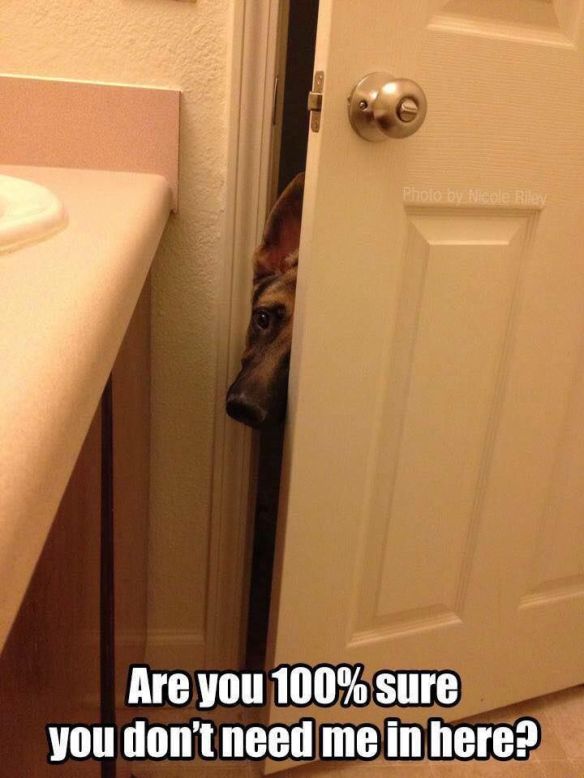
If I discover that someone is a German Shepherd guardian I can count on three topics of conversation because these dogs shed clouds of fur, were adorable as they grew into their ears, and don’t understand why people close the bathroom door.
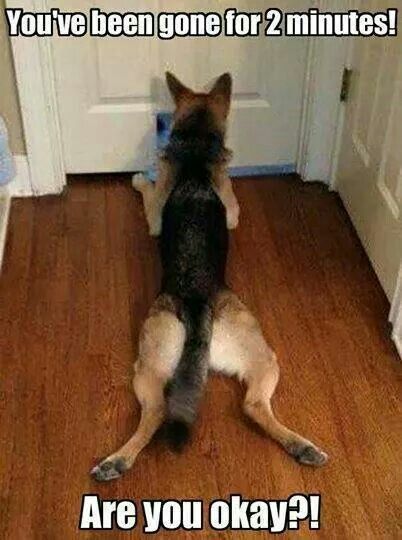
Milo is no exception. Sometimes I’ll be in the shower, and he’ll just poke his big head in to say:
Just checkin’ that you’re OK. Everything alright? You sure? I’m gonna sit down right here and keep you safe. By the way, you know you’re not gonna smell like nothin’ when you get outta there right? I mean it’s your choice, but it takes a while to get a good smell cookin’ and you’re gonna have to start all over again now.
To avoid this constant bathroom company, you can, of course, close the door. But you are going to trip over him as you’re leaving. Is he guarding? Is he lonely? After all, you were in there for minutes and minutes. Is he just blocking cold drafts? Who knows. But, he will be right there.
My travel trailer has nine square feet of bathroom space. There’s not enough room for Milo to lay down. So, for someone camping alone you’d think that the primary purpose of the bathroom door would be to hide the loo from view when it’s not in use. Not if you have a German Shepherd.
“Watch ya doin’ in here?”
“None of your business.”
“Want some company?”
“No.”
“I bet you actually do.”
“No, Milo, you won’t fit.”
“Sure I will. Watch. I’ll just back in over here, like this, humph.”
“Seriously Milo, get out.”
“Just a sec, I think I got it. Now I’m gonna skootch sideways like this, and wiggle my back end this way, and my front end that way.
“Milo, you’re testing my last nerve.”
“Wait, I almost got it. One little hop. There! Done! You see, no problem. We’re both in here. And we even get some lap time.”
Of course, training is an option, but it would require that I not laugh. I’m just glad he can’t open doors.
When despair grows in me
and I wake in the night at the least sound
in fear of what my life and my children’s lives may be,
I go and lie down where the wood drake
rests in his beauty on the water, and the great heron feeds.
I come into the peace of wild things
who do not tax their lives with forethought
of grief. I come into the presence of still water.
And I feel above me the day-blind stars
waiting for their light. For a time
I rest in the grace of the world, and am free.
They say that a tired dog is a good dog and, generally, they’re right. This is a little bit concerning because although this summer with its camping and hiking and swimming has been good for both of us, Milo is getting physically fitter than I am. Each day the gap between what I can do to tire him out and what it takes to tire him out gets a little bit wider.
Milo and I have been camping for 11 weeks now. He started out strong and is getting stronger–swimming more days than not, playing a vigorous game of fetch on most days, and hiking almost every day. He’s a great big muscle with outstanding endurance.
I’m sure I’m much fitter now than I was at the beginning of this trip too. First of all, Milo never hikes alone. Many hikes have the word “lookout” in their name. I guess people like a view, and you need high ground for that sort of thing. So, lots of this summer’s hikes involved an uphill trek. I grew up in a part of Canada that’s so flat that people say you can watch your dog run away for three days. As a result, whenever I put on any vertical metres it feels like a serious (and somewhat exotic) workout. It seems like I’ve been walking uphill all summer, and I’ve noticed that it takes more to get me huffing and puffing than it used to.
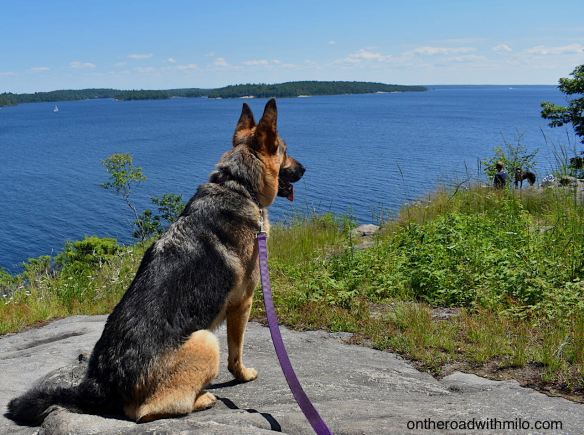
Milo at Lookout Point.
There are other ways my daily activity has increased. For one thing, Milo and I travelled across the country which means I’ve hitched and unhitched my trailer many many times. Setting up the trailer involves deploying five, yes five, jacks, and none of them is electric. I’m getting some serious pipes.
Playing with Milo provides a good workout as well. When we play tug, there are times when I am yanking on my end of the toy as hard as I can. He is strong enough to pull me over, and I have to pull back. It is fun and exhausting and we’ve been doing lots of it this summer.
Except for my Fitbit saying that my resting heart rate is nine beats a minute lower than it was at the beginning of the trip, I don’t have a way to measure my increased fitness. But I know I feel good, and that is better than numbers.
However, even though I feel great, I get tired before Milo does, every single time we play or hike or swim. We are often a tired person and a slightly winded dog duo. This has not turned out to be a problem though because although it is true that a tired dog is a good dog, a mentally fit dog is a good dog too.
I’ve been thinking about physical fitness in terms of how much exercise it takes to make me and Milo tired, but fitness also includes mental fitness, or psychological well-being, or mental health, or whatever you want to call it. This summer our mental fitness has been improving in step with our physical fitness, and that helps him be a good dog and helps me be a good person.
Milo’s the good dog.
In addition to getting more exercise, we’ve been eating good food, spending time in nature, enjoying long hours of restful sleep, and experiencing very little stress. Milo has a guardian who is more centred, and I have a dog who is calmer. It seems like neither of us is sweating the small stuff as much as we used to.
For example, the last people who used the campsite we’re in right now left a week’s worth of stinky trash and recycling in the fire pit. That is the sort of thing that used to make me fume. But this time I just thought “some people make it easier to leave the place better than I found it than others.” It only took about 90 seconds to clean it up, and now I’m enjoying a campfire. Milo is laying on the ground beside the picnic table I’m using as a desk. He’s keeping tabs on the neighbours, and paying attention to dogs walking by in a way that’s alert but relaxed. In other words, he’s being a German Shepherd Dog.
It’s not that he’s too tired to get in trouble, it’s that he is physically and mentally fit. His needs are being met and his life is full enough for him to enjoy being good–good in the sense of being well behaved, and good in the sense of flourishing.
This trip with Milo has helped make my life full enough to enjoy being good too!

 I devoured curry and toured the Tower of London, nibbled Pain au Chocolat after climbing the Eiffel Tower, picnicked with a grey-eyed man on the Piazza San Marco and then we strolled arm in arm along Venice’s canals. I gorged on goulash and spaetzle before retiring to Budapest’s Roman Baths, snacked on Sachertorte after seeing The Magic Flute at the Vienna Volksoper, and drank beer under Munich’s Glockenspiel. And, I wallowed in homesickness as powerful as it was unexpected. I would never have predicted that the best part of that trip would be returning home.
 But, in addition to this everyday kind of stage fright, people can face extra challenges doing their best work. Psychologists have identified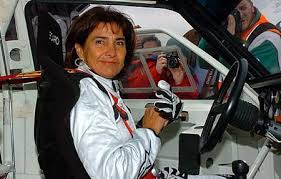
 Milo the AwesomeDog loves to sniff. He regularly sniffs so vigorously that he has to sneeze out the debris he’s sucked into his nose. I am almost overcome with curiosity about what the movie in his mind must “look like” when instead of being based on sight, it’s based on smell-o-vision. And then Horowitz comes along and uses this smell-o-vision as way to look into what it is like to be him. Milo knows he smells, therefore he is?
 I was in an all-positive obedience class at the time, and someone there asked me if Milo was abused as a pup. That question took the wind right out of my sails. I adopted him at eight weeks, and his ‘abuse’ was patience, loving-kindness, and outrageously expensive grain-free food.

 minutes. Is he just blocking cold drafts? Who knows. But, he will be right there.
 On the road with Milo